
Choose a printed roll label for your shampoo, skin care or fragrance bottle. Two details are easier to judge on the pack itself: how the artwork reads against the contents and how the label edges sit on curved glass.
Explore white ink on clear labels or edge-lift testing on glass perfume bottles.
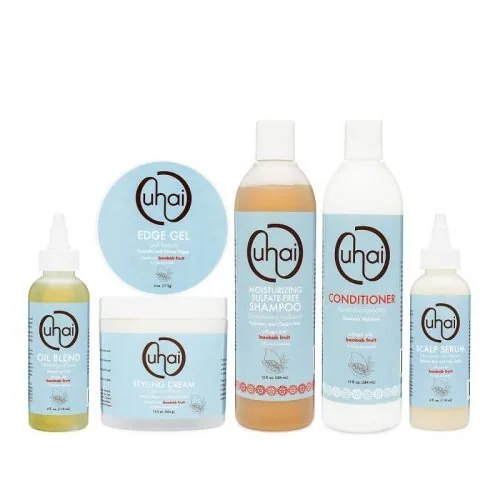
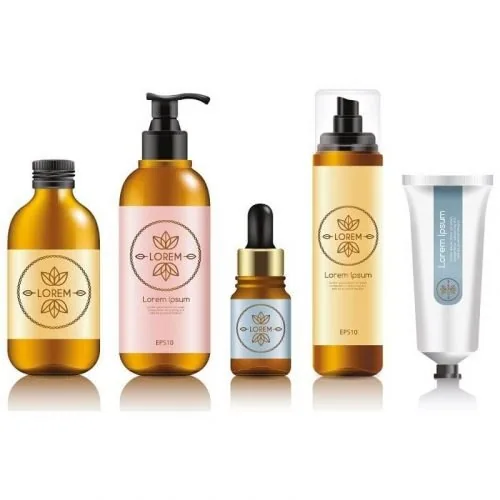
Where to print white ink on a clear bottle label
Clear film lets the bottle and its contents show through. On a dark amber bottle, for example, a pale logo can lose contrast. Print a white underbase beneath the logo to give the colour a light background. Leave the surrounding window free of both white and colour so the liquid stays visible.
- Mark three areas in the artwork. Identify colours that need white underneath, lettering that should print in white only, and windows that should stay clear.
- Supply a separate white-ink layer. Give the white shapes their own named spot colour in the print file. Send a separate preview that shows where white belongs. A white area on a screen can also mean unprinted film; a marked proof lets our prepress team check the difference with you.
- Check a printed sample on the filled bottle. Look at the smallest text, the colour of the logo and the clear window under the lighting in which the pack will be sold. Check for a white rim around fine coloured details before approving the artwork.
How to test a perfume label that lifts at the edges
Send a production bottle, a sample of the lifting label and a photo showing where it starts to lift. Tell us whether the glass is bare, frosted or coated. A test on a flat piece of glass misses the shoulder, taper and surface finish of your bottle.
- Mark the problem area. Check whether the corners cross a shoulder or a change in curvature. Measure the usable label panel and mark the normal placement on a spare bottle.
- Compare samples side by side. Apply the current label and a trial label to separate bottles from the same batch. Use your normal cleaning, drying and application method. Keep placement and pressure consistent. Change one feature at a time: label size or shape, face-stock flexibility, or adhesive.
- Record when and where lifting occurs. Photograph both bottles immediately after application and again after an agreed settling period. Repeat the handling, storage or fragrance contact the pack actually sees. Note the time, conditions and which edges lift.
- Confirm on the packing line. Agree what counts as acceptable edge lift and appearance. If you apply labels by machine, run the selected construction at your usual line settings before approving a production run.
See the illustrated guide: Why do perfume bottle labels lift at the edges?
Start With the Product and Package
| Product or packaging | Selection questions |
|---|---|
| Shampoo, conditioner and body wash | Will the bottle be squeezed? Is it used with wet hands or kept in a shower? |
| Lotions, creams and cosmetics | Is the container rigid or flexible? Will oils or creams contact the label? |
| Perfume and fragrance bottles | What is the glass finish, label size and exposure to fragrance or handling? |
| Transparent bottles and jars | Should the container show through? Which printed areas need white ink? |
Material Options
White or clear BOPP can be reviewed for many rigid packaging applications. For repeated squeezing, a more conformable material such as PE may be appropriate. Metallized materials offer another appearance option. Selection must also account for the adhesive, receiving surface and expected use.
Choose the Finish Around the Design
Matt or gloss lamination, foil detail and other finishes can distinguish a product range. Review the finish on the actual stock; colours and metallic effects can look different on a screen, a flat label and a curved bottle.
Wet Use and Contents Contact
Describe water exposure separately from contact with oils, creams or fragrances. Test the label on representative filled containers, checking adhesion, appearance and print integrity after the agreed handling and exposure. See waterproof label selection.
Prepare a Production Enquiry
- Container material, shape and dimensions, with a sample or photographs if available.
- Label size, quantity and the number of artwork versions in the range.
- Material and appearance preferences, including white ink and decoration.
- Hand or machine application; core, roll diameter and unwind requirements if known.
- Any batch-code printing and the expected use conditions.
Discuss Your Label Project
Send your bottle photo, label dimensions, quantity and number of designs. For a clear label, include the artwork with the white areas marked. For lifting edges, include a close-up and tell us how long after application they appeared.
Explore: All industries · Compare materials · Quote checklist
For cleaning products and resealable packs, see Household & Wet Wipe Labels.