
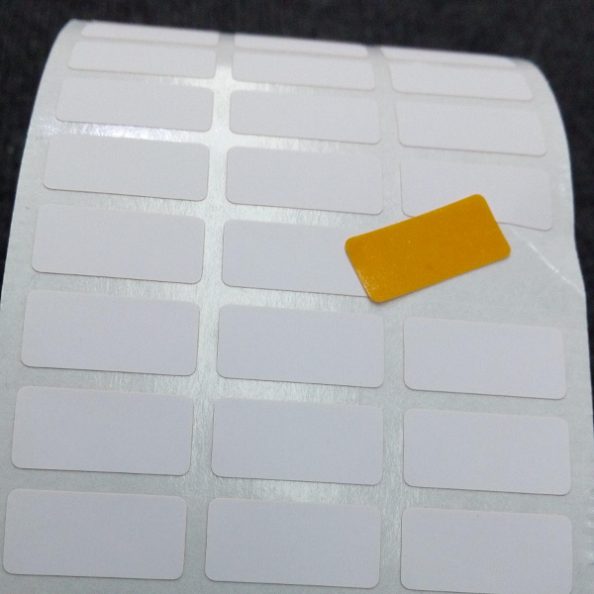
Polyimide labels are used for PCB and PCBA identification where a barcode, serial number or lot code must remain readable through the agreed manufacturing process. The right construction depends on the board surface, soldering profile, cleaning chemistry and printing method.
Xinxing Label can review blank and pre-printed die-cut roll options for your application. Send the process conditions with the label drawing so the film, adhesive and print system can be specified together. Discuss a PCB label specification.

PCB and Electronics Applications
- Board identification applied before or after assembly, with label position and process exposure defined in advance.
- Serial numbers, lot codes, part numbers and 2D codes for production traceability.
- Component and electronics identification where heat exposure or cleaning makes an ordinary packaging label unsuitable.
Specify the Complete Label Construction
| Face stock and print surface | Polyimide film with a print surface matched to the chosen printing method. Colour, thickness and coating are confirmed with the material grade. |
| Heat exposure | Provide peak temperature, time at temperature and number of cycles. Short soldering exposure and continuous service temperature are separate requirements. |
| Adhesive and board surface | Review the actual solder mask or component surface, application conditions and time allowed for bonding before processing. |
| Printing | Choose blank rolls for variable-data overprinting, pre-printed fixed information, or a combination with a clear variable-data area. |
| Label geometry | Confirm width, height, corner shape, spacing and available board area, including clearance from components and process fixtures. |
| Roll supply | Specify core diameter, maximum outside diameter, labels per roll, winding direction and hand or machine application. |
| Quantity and sampling | Sample availability, minimum order and production quantity are confirmed for the selected material and specification. |
Blank or Pre-printed PCB Labels?
Choose blank labels when you will print changing serial numbers or batch information on your own thermal-transfer printer. Share the printer model, resolution and ribbon grade. The ribbon and label coating must be tested together at the intended print settings.
For fixed logos, part numbers or text, request pre-printing. If you will add variable data later, mark the printable area on the artwork. Supply sample data, the barcode type and any required verification grade; a code that scans before processing must also be checked after the relevant process steps.
Trial the Label Through Your Actual Process
- Apply samples to representative boards or components using the intended application method.
- Run the agreed soldering, cleaning and handling sequence. Record the temperature profile, chemicals and exposure times.
- Check lifting, shrinkage, print damage and readability after processing. Include any additional cycles or storage conditions required by your specification.
- Agree acceptance criteria and retain an approved sample and material reference before production.
A material datasheet is a starting point for selection. The performance of one polyimide grade, adhesive or ribbon combination should not be treated as the rating of every polyimide label. For related applications, review high-temperature label requirements.
Questions Before Ordering
Can every polyimide label pass the same reflow profile?
No. Confirm the complete construction against the actual peak temperature, dwell time, number of passes and cleaning process. A temperature figure without its exposure conditions is not enough to approve a label.
Can I use my existing printer and ribbon?
Possibly, but compatibility needs checking. Provide the printer model, print resolution, current ribbon and a sample layout. Test feeding, print quality and post-process readability before changing stock.
Are electrical approvals or special material declarations included?
Identify the required standard or declaration at the enquiry stage. Availability must be checked for the exact material and construction; it is not assumed from the word polyimide.
PCB Label Enquiry Checklist
- Label drawing, dimensions and available marking area.
- Board or component surface and whether labels are applied before or after soldering.
- Peak temperature, dwell time, number of passes and subsequent cleaning chemicals.
- Fixed artwork, variable-data example, barcode type and target readability or grade.
- Printer model, ribbon and application equipment, if used.
- Total quantity, labels per roll, core size, maximum roll diameter and winding direction.
- Required material documentation and sample acceptance criteria.
Prefer to talk it through? WhatsApp +86 199 5367 7578.